
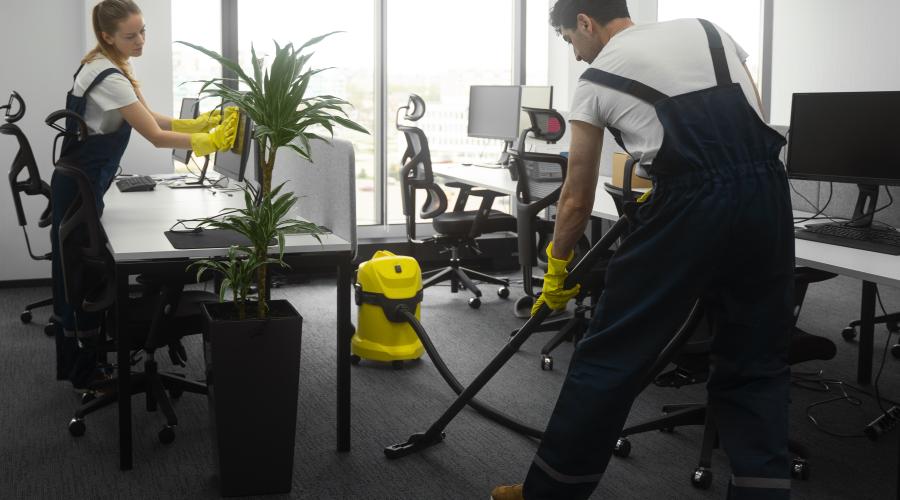
Commercial Deep Cleaning Services
Keeping a commercial facility clean is critical for projecting a professional image, protecting employee health, and adhering to hygiene regulations. While normal cleaning deals with day-to-day upkeep, commercial deep cleaning services take a thorough, precise approach to removing hidden filth, germs, and buildup. Here's what to expect when you hire pros for a deep cleaning.
1. A thorough cleaning of all areas
Deep cleaning, as opposed to normal cleaning, thoroughly cleans every nook and cranny, including frequently neglected areas. A professional service often includes:
- Floors and Carpets: Deep cleaning, stain removal, and high-powered vacuuming.
- Walls & Baseboards: Dusting, cleaning, and sterilizing to eliminate filth.
- Windows and glass surfaces: may be cleaned without streaks, including tracks and frames.
- Restrooms: Disinfection of sinks, toilets, urinals, and tile grout
- Kitchen/Breakroom: Degreasing equipment, sanitizing worktops, and cleaning inside microwaves and refrigerators
- HVAC & Vents: Dust Removal to Improve Air Quality
- High-Touch Surfaces: door knobs, light switches, elevator buttons, and handrails.
2. Advanced Equipment and Techniques.
Professional cleaners employ industrial-grade gear that extend beyond basic mops and vacuums, such as:
- Steam Cleaners - To sanitize without harsh chemicals.
- Scrubbers and Buffers - To restore floors to like-new condition.
- HEPA-filter vacuums - capture allergens and tiny dust particles.
- Electrostatic sprayers - provide uniform disinfection coverage.
3. Customizable Cleaning Plans
Every firm has distinct requirements. A reliable firm will evaluate your area and customize the cleaning technique based on:
- Industry needs (medical facilities, restaurants, offices, and retail).
- Foot traffic levels (heavy traffic areas require more regular thorough cleaning)
- Specific pain areas (include grease in kitchens, mould in bathrooms, and dust in warehouses)
4. Sanitation and disinfection
Businesses value germ-free surroundings, especially in the aftermath of a pandemic. Deep cleaning encompasses:
- Hospital-grade disinfectants (effective against viruses, bacteria, and fungi)
- Concentrate on high-risk zones (restrooms, shared equipment, reception areas)
- Odor removal (remove mildew, smoke, or food odors)
5. Minimal disruption to the business
To minimize disrupting operations, professional teams operate effectively, typically after hours or during periods of low activity. There are several offers:
- Scheduling at night or on the weekend
- Phased cleaning (section-by-section for huge facilities).
- Fast turnaround times
6. Long-term Cost Savings
Regular deep cleaning increases the longevity of furniture, floors, and equipment by preventing:
- Carpet wear from embedded dirt
- Buildup in HVAC systems that decreases efficiency
- Mold/mildew damage in wet places.
It also helps to decrease sick days by keeping the workplace healthy.
When Should You Plan a Deep Clean?
- Before or after important events
- Seasonal transitions (for example, the removal of salt after winter)
- Transferring to a new workplace
- After-construction or refurbishment
- As part of a quarterly maintenance plan
Final thoughts:
Commercial deep cleaning is more than simply a matter of beauty; it is an investment in your company's productivity, safety, and durability. Hiring specialists ensures that the atmosphere is sanitary, friendly, and well-maintained for employees, customers, and visitors.
Do you need to do a deep clean? Contact a reputable business cleaning company now for a cleaner, healthier workplace!